

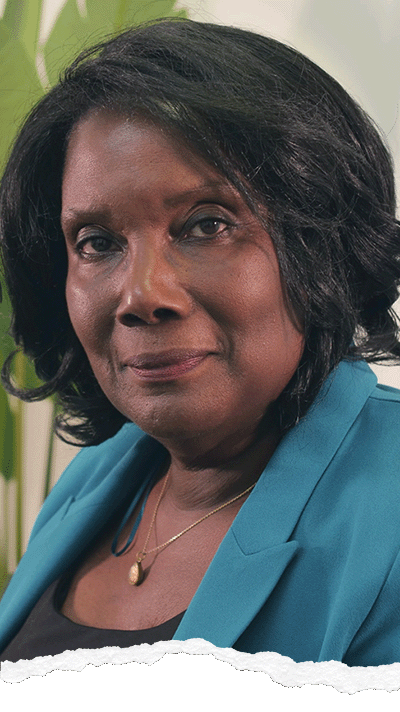
Lucille Paul
“Tek whey yuh git tell yuh git whey yuh want”
Translation:
“Take what you can get until you can get what you want”Explanation:
Each opportunity is a stepping stone toward an ultimate goal.
Place of Origin: Carriacou, Grenada
Arrival: 1961
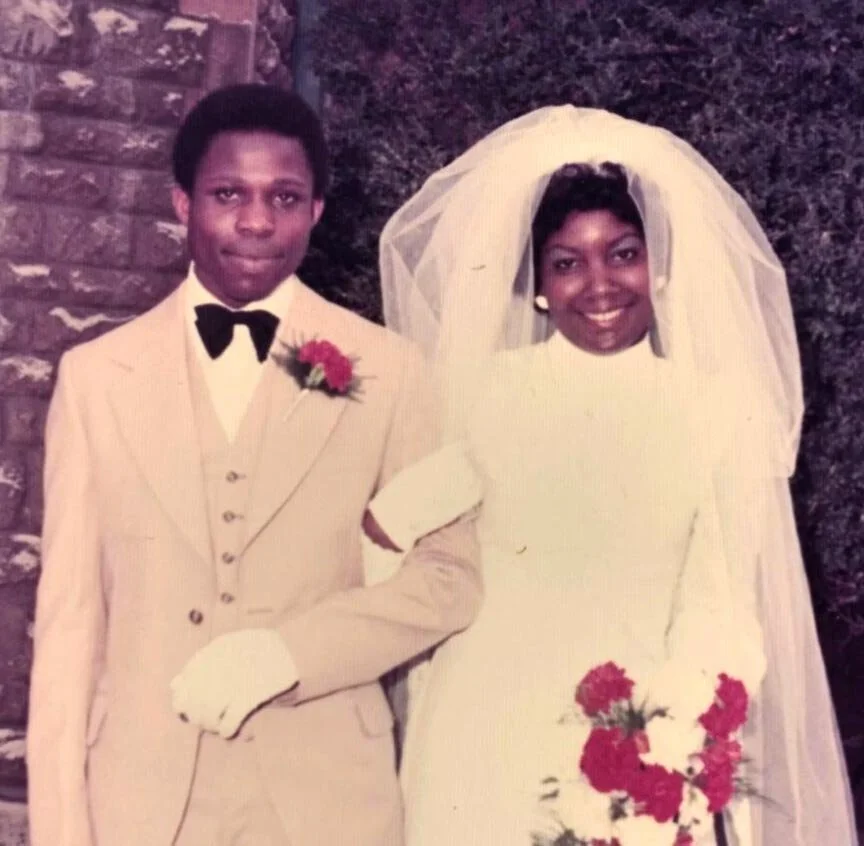
A story of family strength, community, and resilience
Arriving in England as a young child from Carriacou, Lucille recalls the shock of cold streets, cramped housing, and unfamiliar customs. Her story weaves humour with hardship, highlighting family strength, community, and her mother’s quiet resilience in the face of prejudice.
Listen to Lucille's Oral Stories
Dad and Opportunities in England
-
My early memories of the Caribbean was, my dad was what they called a seaman. So he travelled throughout the Caribbean, either fishing or cargo. They transported cargo to different Caribbean islands.
So, obviously we were left with my mother, until the point came when obviously there was family coming back to England and erm, they were telling you there was opportunities in England. So my dad then decided to take the opportunity to actually come to England and bring all the children. Bearing in mind, he had four children at the time, I was the youngest, but his parents and my mother's parents lived in Grenada. And it's a little island, part of Grenada, called Carriacou.
So in order for him to actually suss England out, he had to take us to my mother's grandparents to live with her, and then he actually came to England to actually see what this England was all about. Because, I mean, they were all driven by the fact it was the Queen's country, they were looking for people, it was sold to them like, you know, it was the land of hope and glory, the street was paved with gold, and he wanted a better life for the family.
So, he decided to come to England, to not so much seek his fortune, but just to see whether or not he could make it, and make a better life for his children. And believe it or not, his first contact when he came, was in Birmingham. So, West Bromwich actually. laughter It was West Bromwich. And that's where he came to family there and he found rented accommodation and he worked and he worked in a foundry.
England Cold, Fish and Chips, Bedford
-
He talked more about it being cold. All he could think about it was cold, and um, and the smoke and the fog and the houses, erm, having to live in one room, erm, having to live... He rented, erm, from an Asian family. I mean, it was quite prevalent then that a lot of West Indians didn't rent from Asian family.
Erm, he complained about the food, but he loved fish and chips. One of the things he did love, laughter because he always used to say, walking past the fish and chip shop, it was just too tempting. And he loved fish and chips. And even, I mean, he's passed now, but even when he retired and went back to the Caribbean, when he came back to England, you know, and came to visit us, before any meal was prepared, he had to have a fish and chips. laughter And once he had his fish and chips, he could break into his Caribbean food after that. laughter And he had to have it out of the paper, not in a plate, not with a knife and fork, out of the paper as it was back then. And, and it used to break the ice.
He talked about when he was in the foundry being given the dirtiest of jobs. Erm, the longest, longest of jobs and his pay being unequal to his, erm, after finding out after a time. So there was a bit of that. I mean, he did suffer a little bit of racism, but it was more or less, my parents were more or less, it's as though they thought that was, erm, not okay but it was part of the price that you would pay, for wanting to be here in the UK.
Erm, now, what he did then, he decided, yes, this was the place that he wanted to be, but he had gone to family in Sheffield, to see whether he wanted to live there. He'd gone to family in Huddersfield he wanted to see, he didn't like the smog in Huddersfield because, and Sheffield, because it was quite really, really, erm dark and he didn't like the houses out there because they were dark and black. You know what it is up north. And, he eventually settled in Bedfordshire. So, what he did then, erm, was send for my mother. But by then, erm, my mother's mum had died and we had to go and live with his mother then, another grandparent. She wasn't as kind, but my mother left her, us with her and she came over and she didn't work at the time. She came over, and then they decided to buy a house, in Bedfordshire.
So we never actually lived in any rented accommodation, when we came to England at all. My dad and mum, my mum and dad had bought a house. And then my mum came back to Carriacou, this island off Grenada, and then that was when we then came over all in one.
Learning English Customs — Food
-
So the same way, she was saying we had to be patient with the taunts, the racism, or teach them, be patient and teach them and explain. Erm, I expected the same, that we had to learn why the customs was the way there was, why, you know, they didn't season their meat. Why didn't they season their meat? Do you know what I mean? All these things, we had to learn.
And in fact, us as children, erm, you know, going to school and seeing what our English friends ate, there was kind of erm, erm, erm, I don't know what the right word is, an embarrassment about we came a little bit embarrassed, not about eating our food, but about letting anybody else know what we ate. For instance, if our friends came to the door to call for us and we were in the middle of a meal, we used to run in the kitchen and shove it in the oven and hide it, because we didn't want them to know what our food looked like, you know what I mean, let alone smelt like.
And then one day our neighbour Meg came through the back door because side entrances was, that's how you, you know, it was notorious to use a side entrance. And we had cooked a meal, now it's, this meal, I mean, nowadays they call it polenta, but back then Caribbean islands called it different things. We from our island called it cuckoo, but Jamaicans might call it, erm, cornmeal. Erm, erm. Barbadians probably call it cuckoo. It was cooked in different ways, because when it was cooked, some people would spread it out and let it set and cut it up in slabs. But we from Carriacou, where we came from, when we boiled it, we rolled it in a, in a bowl and it came out just balls of blobs, balls of blobs. And that's how. And we served it with, erm, okra or erm, callaloo. And it wasn't very sightly to look at because okra, when you sort of cooked it down, it became quite slimy. And, erm, and then fish was put into it, sometimes tinned fish and fresh fish as well. So it didn't look very appealing. But, Meg had come through the back door and Mum wasn't hiding anything. It was the children, us, we were the ones that were hiding our food because we felt kind of embarrassed. And she was looking with curiosity and Mum says, come in, come in and try some. And she came in and she tried it and she loved it. laughter She absolutely loved it.
And mum told her what we did with the leftovers, because the leftovers, you could have it with milk as a breakfast, or you could fry it dry and have it on the side with eggs or whatever.